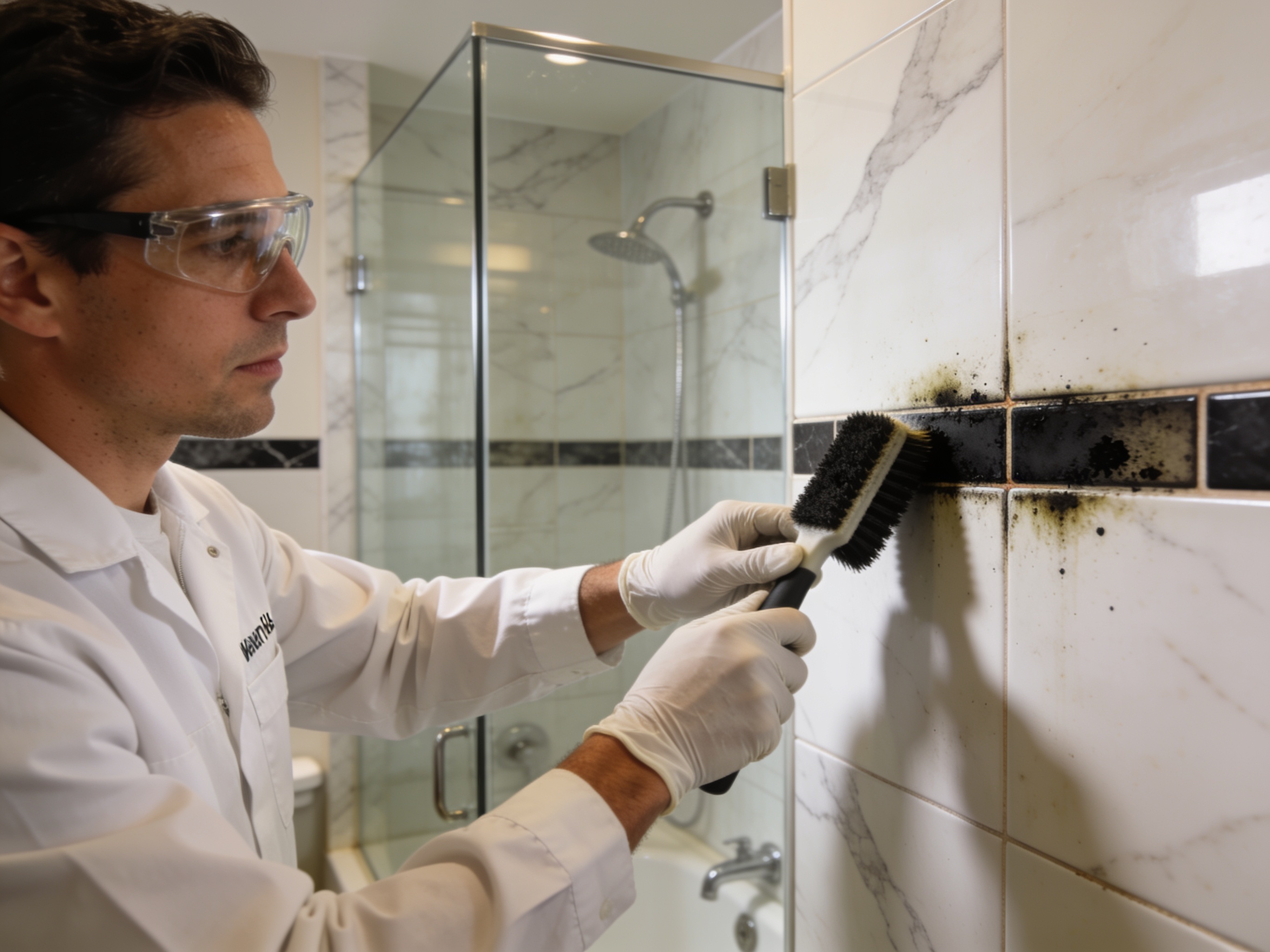
Beverly Hills homes built before the 1970s often feature original ceramic tile showers with cementitious grout that traps moisture from daily use. The mild Mediterranean climate keeps daytime temperatures warm enough to promote evaporation yet cools rapidly at night, leaving residual humidity inside bathrooms that lack mechanical ventilation. This cycle allows black mold to colonize grout joints and behind loose caulk, especially in the Beverly Hills Flats and Golden Triangle where many residences have limited attic space for proper exhaust routing.
When addressing shower mold we first isolate the affected area with containment to prevent spores from migrating into adjacent bedrooms or hallways. We remove compromised grout and caulk mechanically rather than relying solely on topical sprays, then treat the substrate with EPA-registered antimicrobials approved for use in Los Angeles County. In homes near Beverly Gardens Park or Greystone Mansion, we frequently encounter single-stack plumbing that makes leak tracing more involved because access panels are limited or nonexistent.
After remediation we install new mildew-resistant silicone caulk and recommend a small exhaust fan tied to the light switch if one is absent. This step is critical in Trousdale Estates properties where hillside orientation can create micro-climates with slightly higher ambient humidity. We always leave the work area dry to the touch and provide a written moisture reading so homeowners can verify conditions themselves before reinstalling any shower doors or accessories.
Technician insight
In Beverly Hills the thing that catches most people out with Shower Mold Removal is the way older tile showers in the Flats sit directly against uninsulated exterior walls. The cool night air condenses inside the wall cavity even when the shower looks dry, so we always pull baseboards and check for hidden saturation before we close anything up.
Persistent black lines in a 1960s shower
A homeowner in the Beverly Hills Post Office area noticed recurring dark grout lines despite regular cleaning. We found saturated drywall behind the tile caused by a slow leak at the mixing valve. After isolating the wall, replacing the compromised section, and treating the remaining surfaces, the shower stayed dry and mold-free through the next winter.
Shower Mold Removal Services We Offer
✓Grout Line Mold Treatment
Deep cleaning and antimicrobial treatment of discolored grout joints without removing tile, followed by sealing to slow future growth in humid Beverly Hills bathrooms.
✓Shower Caulk Replacement
Complete removal of moldy silicone or latex caulk around tubs and showers, substrate cleaning, and installation of mildew-resistant 100% silicone in one visit.
✓Hidden Leak Detection
Moisture meter and thermal imaging inspection behind shower walls to locate plumbing leaks common in older Los Angeles County homes before visible damage spreads.
✓Ventilation Assessment and Upgrade
Evaluation of existing bathroom fans and ducting with recommendations or installation of properly sized exhaust to reduce moisture in homes near West Hollywood and Culver City.
✓Tile and Substrate Drying
Targeted drying of wet tile, backer board, and framing using contained air movers and dehumidifiers sized for Beverly Hills residential construction.
Shower Mold Removal Cost in Beverly Hills, CA
| Service | Typical Range | What Affects It |
|---|---|---|
| Grout and caulk treatment only | $350–$650 | Single standard shower; increases with multiple showers or extensive discoloration. |
| Shower mold removal with leak tracing | $600–$1,100 | Includes moisture mapping and minor substrate drying; higher if wall access is required. |
| Ventilation fan installation add-on | $450–$750 | New fan and short duct run; price rises with attic access difficulty in older homes. |
Ranges are typical for Beverly Hills, CA and confirmed with an exact written quote before any work starts.
How it works
- 1
Site Assessment
We inspect the shower, test moisture levels in adjacent walls, and identify the source of water intrusion using meters and visual checks.
- 2
Containment Setup
Plastic barriers and negative air are established to keep spores from entering living spaces in the home.
- 3
Removal And Treatment
Affected grout and caulk are removed, surfaces are cleaned, and EPA-registered antimicrobials are applied to kill remaining mold colonies.
- 4
Drying And Final Sealing
The area is dried to documented dry standards, then new caulk is installed and the space is returned to normal use.
Pricing
Pricing varies with shower size, extent of hidden damage, and whether ventilation upgrades are needed.