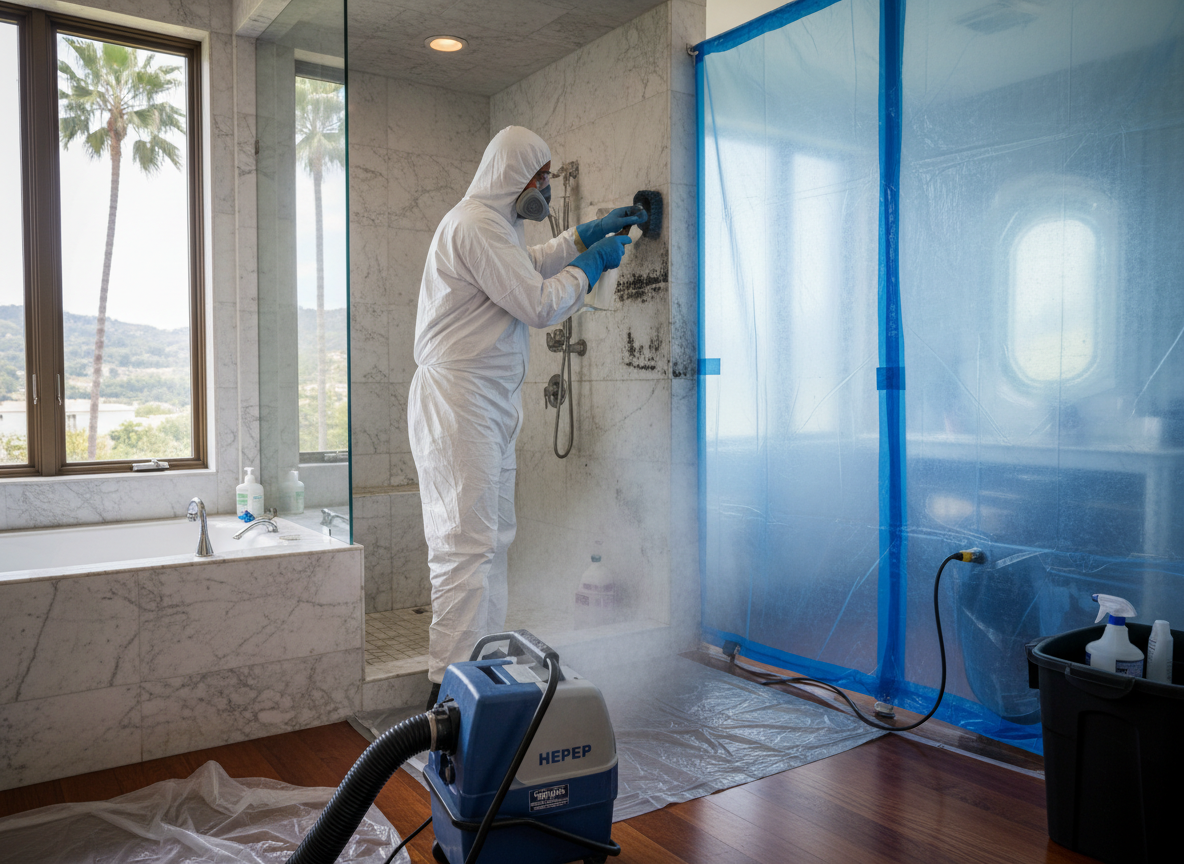
Bathrooms in Beverly Hills homes, especially those in the Golden Triangle and Beverly Hills Post Office neighborhoods, often feature original tile work from the 1950s through 1970s that traps moisture behind grout lines. The area's mild Mediterranean climate keeps daytime temperatures moderate but allows cool nights to raise relative humidity inside poorly vented spaces, accelerating mold growth on drywall returns and cabinet bases. Technicians must pull vanities and inspect underlayment because leaks from aging supply lines frequently travel along subfloors before surfacing near shower thresholds.
Containment in these compact bathrooms requires sealing HVAC registers to prevent spores from traveling into adjacent living areas common in Trousdale Estates estates. Removal protocols include HEPA vacuuming of porous materials followed by antimicrobial treatment on remaining framing, with particular attention to the back of tub surrounds where Los Angeles County building practices left limited access points. Homeowners frequently overlook ceiling drywall above showers, which absorbs steam that condenses during the cool evening hours typical of the region.
Final clearance involves moisture metering of all surfaces and verification that exhaust fans terminate properly to the exterior, a detail often missed in renovations of Beverly Hills Flats properties. Post-remediation, crews recommend sealing grout with breathable products suited to the local hard water mineral content that can otherwise crack new finishes. This approach addresses both visible colonies and the hidden moisture reservoirs created by the combination of older plumbing and regional humidity swings.
Technician insight
In Beverly Hills, the thing that catches most people out with Bathroom Mold Removal is slow leaks from original copper lines in homes built before 1970 across the Golden Triangle and Beverly Hills Post Office, where cool night humidity lets mold spread behind tile long before any musty smell reaches the hallway.
Mold Behind Shower in Beverly Hills Flats Home
Homeowner reported persistent odor after recent rains. Inspection revealed water tracking from a corroded valve along the subfloor of a 1960s bathroom. Crew removed base drywall, treated framing, and improved fan venting to the exterior. The space passed moisture testing with no recurrence after three weeks.
Bathroom Mold Removal Services We Offer
✓Shower Stall Mold Remediation
Removes mold from tile, grout, and drywall returns in showers while addressing leaks common in pre-1980 Beverly Hills plumbing.
✓Vanity Area Mold Treatment
Targets mold under and behind bathroom vanities caused by slow supply line drips in Los Angeles County homes.
✓Ceiling Mold Extraction
Extracts mold from bathroom ceilings where steam condenses during cool nights in neighborhoods like Trousdale Estates.
✓Bathtub Surround Mold Removal
Treats mold behind tub surrounds and on adjacent walls in older Beverly Hills Flats properties with limited access.
✓Ventilation System Mold Cleaning
Cleans mold from exhaust fans and ducts that recirculate spores due to improper termination in Beverly Hills homes.
Bathroom Mold Removal Cost in Beverly Hills, CA
| Service | Typical Range | What Affects It |
|---|---|---|
| Small bathroom inspection and surface treatment | $350–$650 | Increases with tile demolition or multiple rooms |
| Shower surround remediation | $800–$1,400 | Depends on extent of drywall replacement needed |
| Vanity and cabinet base mold removal | $450–$750 | Higher when plumbing access requires cabinet disassembly |
| Ceiling and ventilation cleaning | $300–$550 | Varies with ductwork length in older homes |
Ranges are typical for Beverly Hills, CA and confirmed with an exact written quote before any work starts.
How it works
- 1
On-Site Inspection
Technicians examine all bathroom surfaces, pull fixtures, and use moisture meters to locate hidden water in Beverly Hills homes.
- 2
Containment Setup
Plastic barriers and negative air machines isolate the bathroom to protect adjacent rooms in multi-story Trousdale Estates properties.
- 3
Mold Removal
HEPA vacuuming and physical removal of affected materials followed by antimicrobial application on remaining surfaces.
- 4
Drying and Verification
Dehumidification and post-treatment moisture checks ensure the space meets clearance standards before reassembly.
Pricing
Pricing varies by square footage affected, accessibility behind fixtures, and whether hidden mold extends into subfloors or walls.